Medicare Advantage NEMT Benefits 2026: The Complete Guide to Free Medical Transportation by Insurer
Every year, more than 3.6 million Americans miss critical doctor appointments for one simple reason: they cannot find a ride. This transportation gap costs our healthcare system an estimated $150 billion annually in preventable emergency visits, worsening chronic conditions, and delayed diagnoses.
If you have been searching for answers about whether Medicare covers transportation to medical appointments, you are not alone. This question leads millions of seniors, caregivers, and healthcare providers to confusing information scattered across government websites and insurance documents.
Here is what you need to know right now: Original Medicare does not cover routine rides to the doctor. However, Medicare Advantage plans often do, and understanding exactly how these benefits work could mean the difference between making your next appointment and missing it entirely.
This guide breaks down everything about Medicare Advantage NEMT benefits in plain language. Whether you are a Medicare beneficiary trying to get to dialysis three times a week, a caregiver scheduling rides for an aging parent, or an NEMT provider looking to understand billing requirements, you will find the answers you need.
What Does NEMT Mean and Why Does It Matter?
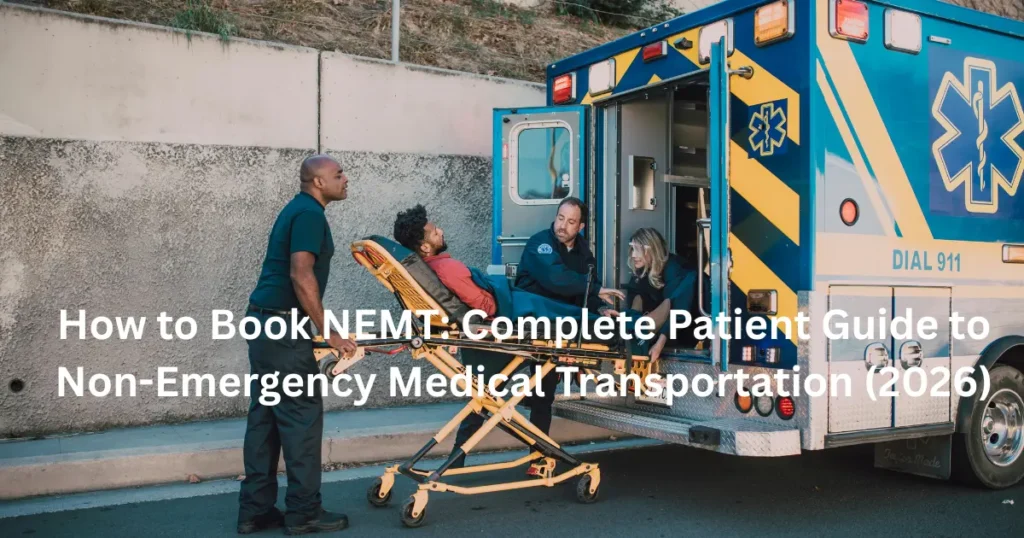
Non-Emergency Medical Transportation, commonly called NEMT, refers to scheduled transportation services that help people get to medical appointments when they do not need an ambulance. Think doctor visits, dialysis treatments, physical therapy sessions, and pharmacy pickups.
The key word here is “non-emergency.” When someone needs immediate medical attention, an ambulance is the appropriate response. But for the millions of routine healthcare visits happening every day, ambulances are neither practical nor cost-effective.
NEMT services fill this gap by providing wheelchair vans, sedans, stretcher vehicles, and even rideshare options through companies like Uber Health and Lyft Pass for Healthcare. These services ensure that lack of transportation does not become a barrier to receiving necessary medical care.
The health impact of reliable medical transportation extends far beyond convenience. Research shows that NEMT programs reduce missed appointment rates by 25 to 50 percent among chronic disease patients. For diabetic patients specifically, regular transportation access has been linked to a 50 percent reduction in emergency room visits. Every dollar invested in NEMT generates approximately eleven dollars in healthcare savings by preventing costly hospitalizations.
For a deeper understanding of how to use these services, our complete guide on how to book NEMT transportation walks you through the entire process step by step.
Does Medicare Cover Non-Emergency Medical Transportation?
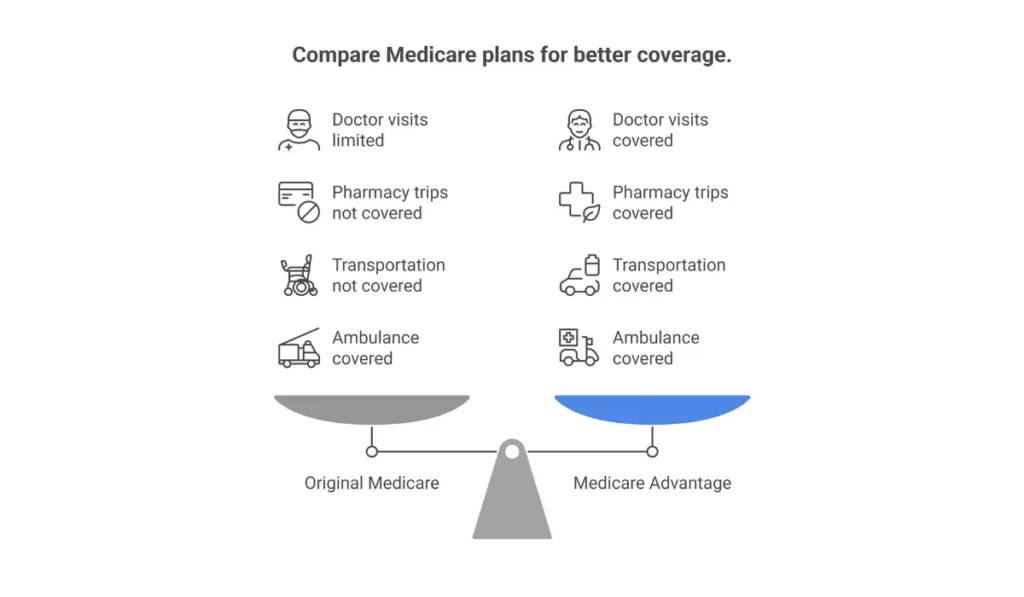
The short answer is nuanced. Original Medicare, which includes Part A hospital coverage and Part B medical coverage, does not pay for routine transportation to doctor appointments. This surprises many beneficiaries who assume their government health insurance covers all medically necessary services.
What Original Medicare Actually Covers
Medicare Part B does cover ambulance transportation, but only under strict conditions. Your health condition must require the medical equipment and monitoring that only an ambulance provides. In practical terms, this means:
- You must be bed-confined, meaning you cannot get up, walk, or sit in a chair without assistance
- Using any other form of transportation would endanger your health
- The ambulance must take you to the nearest appropriate medical facility
- Documentation from your physician must support medical necessity
Even when ambulance transport qualifies for coverage, you still pay the Part B deductible plus 20 percent coinsurance. For patients requiring repetitive ambulance transport, such as dialysis patients, Medicare requires prior authorization after a certain number of trips within a specified timeframe.
What Original Medicare Does NOT Cover
The list of excluded transportation services under Original Medicare includes:
- Rides to routine doctor or specialist appointments
- Transportation to pick up prescriptions
- Wheelchair van or ambulette services
- Taxi or rideshare services
- Gas mileage reimbursement when family members drive you
- Transportation to dialysis centers (unless ambulance is medically necessary)
- Rides to chemotherapy or radiation treatment
This coverage gap affects millions of Americans who have Medicare but lack personal transportation. Rural beneficiaries face particularly severe challenges, sometimes living an hour or more from the nearest specialist.
The Medicare Advantage Difference
Medicare Advantage plans, also called Part C, are offered by private insurance companies approved by Medicare. These plans must cover everything Original Medicare covers, but they can also offer supplemental benefits that traditional Medicare does not provide.
Transportation is one of the most valuable supplemental benefits many Medicare Advantage plans include. The 2018 CHRONIC Care Act expanded the flexibility of Medicare Advantage plans to address social determinants of health, including transportation barriers. Plans fund these benefits through rebates from Medicare, averaging around $2,250 per enrollee in 2025-2026.
According to the Centers for Medicare & Medicaid Services, approximately 33 million Americans were enrolled in Medicare Advantage plans as of 2024, with enrollment continuing to grow. Among these plans, roughly 24 to 30 percent of individual Medicare Advantage plans offer transportation benefits in 2026. That percentage jumps significantly higher for Special Needs Plans, where 67 to 85 percent include transportation.
How Medicare Advantage Transportation Benefits Work in Practice
If your Medicare Advantage plan includes a transportation benefit, here is exactly how the system operates.
The Broker System Explained
Medicare Advantage plans do not handle transportation logistics themselves. Instead, they contract with specialized transportation broker companies to manage ride coordination. The major brokers serving this market include:
- Modivcare (formerly LogistiCare): The largest transportation broker, serving UnitedHealthcare, Humana, and several other major insurers
- MTM (Medical Transportation Management): Partners with Aetna, Molina, and various regional plans
- SafeRide Health: Works with Humana and offers mileage reimbursement programs
- Veyo: A subsidiary of MTM focusing on technology-driven transportation coordination
- Access2Care: Another MTM subsidiary specializing in hospital discharge transportation
These brokers maintain networks of transportation providers, handle scheduling, track trips, manage complaints, and process payment to drivers.
Step-by-Step Booking Process
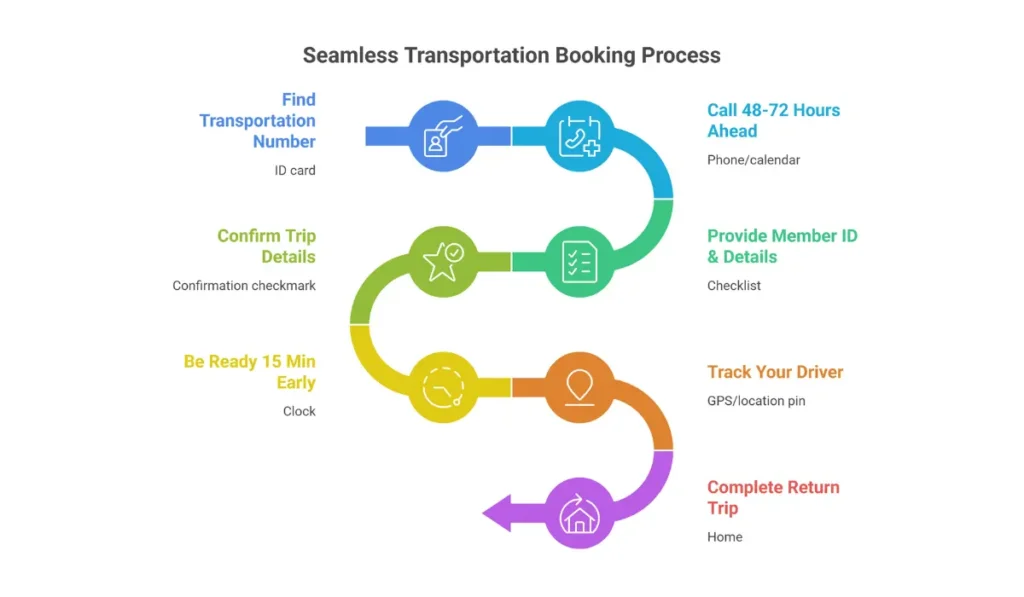
Scheduling a Medicare Advantage transportation ride follows this general process:
Step 1: Find Your Transportation Contact Information
Look on your Medicare Advantage member ID card for a dedicated transportation phone number. You can also find this information in your plan’s Evidence of Coverage document, Summary of Benefits, or online member portal.
Step 2: Call or Use the App to Schedule
Contact the broker at least 48 to 72 hours before your appointment. Many brokers now offer mobile apps and online portals for scheduling. Modivcare has the MyModivcare.com portal, while MTM offers the MTM Link app.
Step 3: Provide Required Information
Have the following details ready when you call:
- Your full legal name and date of birth
- Medicare Advantage Member ID number
- Exact date and time of your medical appointment
- Complete pickup address including apartment or building numbers
- Complete destination address including suite numbers
- Provider name and phone number
- Your mobility status (ambulatory, wheelchair, or stretcher)
- Whether you need a return ride and if it should be scheduled or will-call
- Whether you need an escort or companion to ride with you
- Any special equipment needs such as portable oxygen
Step 4: Confirm Your Trip Details
The broker will provide a confirmation number and pickup window. Most transportation services give a 15-minute window rather than an exact time. You might be told your pickup is scheduled between 9:00 and 9:15 AM, for example.
Step 5: Prepare for Your Ride
Be ready at least 15 minutes before your scheduled pickup window. Drivers typically wait only 5 minutes before marking a trip as a no-show. Have your phone available in case the driver needs to contact you.
Step 6: Track Your Driver
Many brokers offer real-time GPS tracking through their apps or a “Where’s My Ride?” phone line. Use these tools if your driver appears late.
Step 7: Complete Your Return Trip
If you scheduled a return ride for a specific time, be ready at that time. If you selected will-call, contact the broker when you are ready to be picked up and expect a 30 to 60 minute wait.
For detailed booking instructions specific to different insurers and brokers, see our comprehensive guide on how to book NEMT services.
Types of Vehicles Available
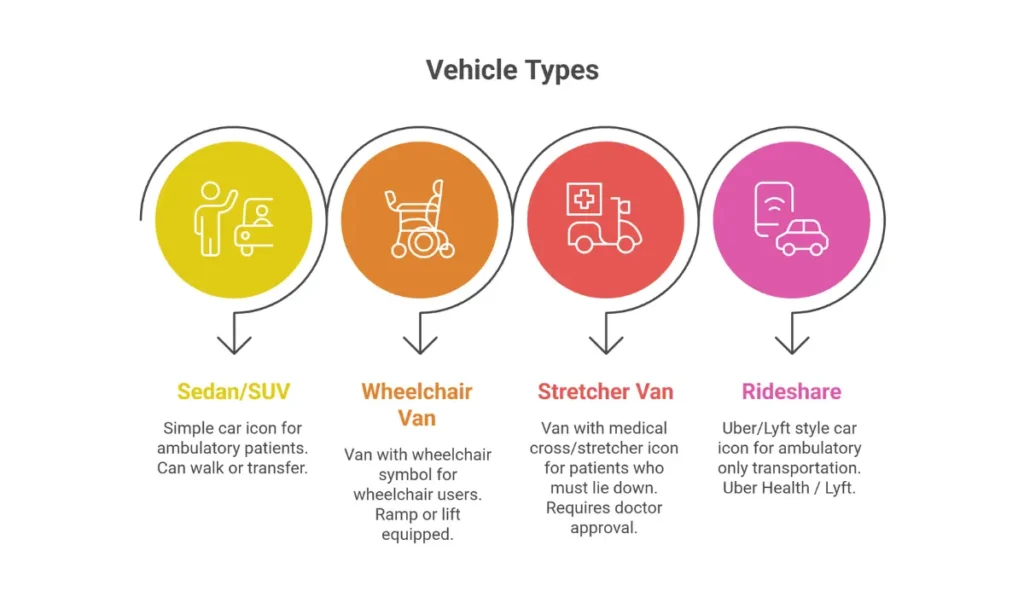
Medicare Advantage transportation benefits typically include access to several vehicle types matched to your mobility needs:
Ambulatory Sedan or SUV: Standard vehicles for passengers who can walk, use a cane, or use a walker and transfer into a regular car seat. This is the most common and cost-effective service level.
Wheelchair-Accessible Van: Vehicles equipped with ramps or hydraulic lifts for passengers who remain in their wheelchair during transport. The driver assists with wheelchair securement using four-point strap systems.
Stretcher or Gurney Van: For patients who must remain lying down during transport. This service level typically requires a Physician Certification Statement documenting medical necessity.
Bariatric Vehicle: Specialized transport for patients requiring heavy-duty equipment. Requires advance notice and may not be available in all areas.
Rideshare: Some plans now offer Uber Health or Lyft Pass for Healthcare as transportation options. These are typically limited to ambulatory patients and have shorter wait tolerances.
Understanding Trip Limits and Restrictions
Most Medicare Advantage transportation benefits come with annual trip limits. Common limits range from 12 to 48 one-way trips per year, though some plans offer more generous allowances. Important things to understand about trip counting:
- One-way counting: A round trip to and from an appointment uses TWO trips from your annual allowance
- Trip resets: Limits typically reset on January 1 each year
- Eligible destinations: Most plans cover trips to medical appointments, dialysis, therapy, labs, and imaging. Some also cover pharmacy trips. Fewer cover non-medical destinations like grocery stores.
- Service area limits: Rides are usually limited to your plan’s geographic service area
- Advance booking requirements: Most brokers require 48 to 72 hours advance notice. Same-day rides may be available for urgent situations but are not guaranteed.
Medicare Advantage Transportation Benefits by Insurance Company
Coverage details, trip limits, and booking processes vary significantly between insurers. Below is a detailed breakdown of what each major Medicare Advantage carrier offers.
UnitedHealthcare Medicare Advantage Transportation
As the largest Medicare Advantage insurer in the country, UnitedHealthcare offers transportation benefits through many of its plans, particularly the AARP Medicare Advantage lineup.
Primary Broker: Modivcare
Typical Trip Limits:
- Standard HMO/PPO plans: 12 to 24 one-way trips annually
- AARP Medicare Advantage: Varies by specific plan and county
- UnitedHealthcare Dual Complete (D-SNP): 24 to 48 or more one-way trips
Scheduling Contact:
- Reservations: 1-800-349-1855
- Ride Assist (will-call returns): 1-833-587-3901
- Online: MyModivcare.com
Key Features:
- Strong will-call return process
- Some plans include trips to gyms under Renew Active fitness benefit
- Pharmacy trips available on select plans
What to Know: UnitedHealthcare benefits are highly county-specific. Plans in urban areas often have more generous transportation allowances than rural plans. Always verify your specific plan’s Evidence of Coverage before relying on transportation.
Humana Medicare Advantage Transportation
Humana offers transportation benefits on many of its Medicare Advantage plans with a notable mileage reimbursement option.
Primary Brokers: SafeRide Health, Modivcare
Typical Trip Limits:
- Standard plans: 12 to 24 one-way trips
- Humana Gold Plus: Varies by plan
- Humana D-SNP: Up to 48 one-way trips in some areas
Scheduling Contact:
- Reservations: 1-866-588-5122
- Support line: 1-866-588-5123
- Online: MyHumana portal
Key Features:
- Mileage reimbursement program through SafeRide for members with friends or family who drive them
- Volunteer driver options in some markets
- 72-hour advance booking requirement strictly enforced
What to Know: Humana’s mileage reimbursement option is unique among major insurers. If a family member regularly drives you to appointments, you may be able to receive payment for their gas and time. Contact SafeRide Health for details.
Aetna Medicare Advantage Transportation
Aetna, now part of CVS Health, offers transportation through its Medicare Advantage portfolio with strong integration into CVS pharmacy services.
Primary Broker: MTM Health
Typical Trip Limits:
- Standard HMO/PPO plans: Up to 24 one-way trips
- Aetna D-SNP: 24 to unlimited trips depending on plan
- FIDE-SNP (Fully Integrated): Some plans offer unlimited medical transportation
Scheduling Contact:
- Phone number is plan-specific; check your Evidence of Coverage
- Aetna Health app includes transportation features
Key Features:
- CVS integration allows coordination with MinuteClinics and HealthHUB locations
- Some D-SNP plans offer unlimited rides
- Technology-forward approach through MTM Link app
What to Know: Not all Aetna Medicare Advantage plans include transportation. The benefit is more common in their D-SNP and special needs plans than in standard HMO/PPO offerings.
Cigna Medicare Advantage Transportation
Cigna, operating under the Cigna-HealthSpring brand for Medicare products, provides transportation benefits through regional broker partnerships.
Primary Brokers: Regional vendors including Access2Care and SafeRide Health
Typical Trip Limits:
- Standard plans: 12 to 24 round trips (24 to 48 one-way trips)
- Cigna D-SNP: More generous limits
Scheduling Contact:
- Plan-specific phone number in your member materials
Key Features:
- Focus on coordinated care for chronic conditions
- D-SNP plans offer more consistent transportation support
- Moderate trip limits compared to competitors
What to Know: Cigna’s broker partnerships vary by region, which can lead to different user experiences depending on where you live.
Anthem (Elevance Health) BCBS Medicare Advantage Transportation
Anthem Blue Cross Blue Shield plans operate under regional names and offer transportation through various broker partnerships.
Primary Brokers: Modivcare and MTM depending on state
Typical Trip Limits:
- Standard plans: 12 to 36 one-way trips
- D-SNP plans: More generous in most states
Scheduling Contact:
- Highly state-specific; check your plan documents
Key Features:
- Leverages local Blue Cross Blue Shield provider networks
- Some state D-SNP plans are exceptionally robust
- Sydney Health app for benefit management
What to Know: Anthem is the most fragmented major insurer for transportation benefits. Rules, contacts, brokers, and limits can differ dramatically from state to state. Always verify details with your specific state affiliate.
Kaiser Permanente Medicare Advantage Transportation
Kaiser’s integrated healthcare model creates a unique transportation situation.
Primary Approach: In-house coordination with SafeRide Health or Modivcare partnerships
Typical Trip Limits: Up to 24 one-way trips within a 50-mile radius
Scheduling Contact:
- Member Services: 1-877-828-4512
- TTY: 711
Key Features:
- Highly coordinated with Kaiser appointments
- Reliable service quality
- Integrated into Kaiser’s care management approach
What to Know: Critical limitation: Kaiser transportation benefits are typically only valid for trips to Kaiser Permanente facilities. If you see specialists outside the Kaiser network (which is rare given their closed system), you may not be able to use your transportation benefit.
Wellcare Medicare Advantage Transportation
Wellcare, part of Centene Corporation, serves many Medicaid and dual-eligible populations with corresponding transportation focus.
Primary Brokers: Veyo, MTM, regional partners
Typical Trip Limits:
- Standard plans: 12 to 48 one-way trips
- D-SNP plans: Higher limits, up to 48 or more
Scheduling Contact:
- Varies by plan and state; check member materials
Key Features:
- Strong D-SNP focus
- Good coverage in markets with high dual-eligible populations
- Some plans include mileage reimbursement
What to Know: Wellcare’s transportation availability and quality varies significantly by county. Their D-SNP plans tend to have the most robust transportation benefits.
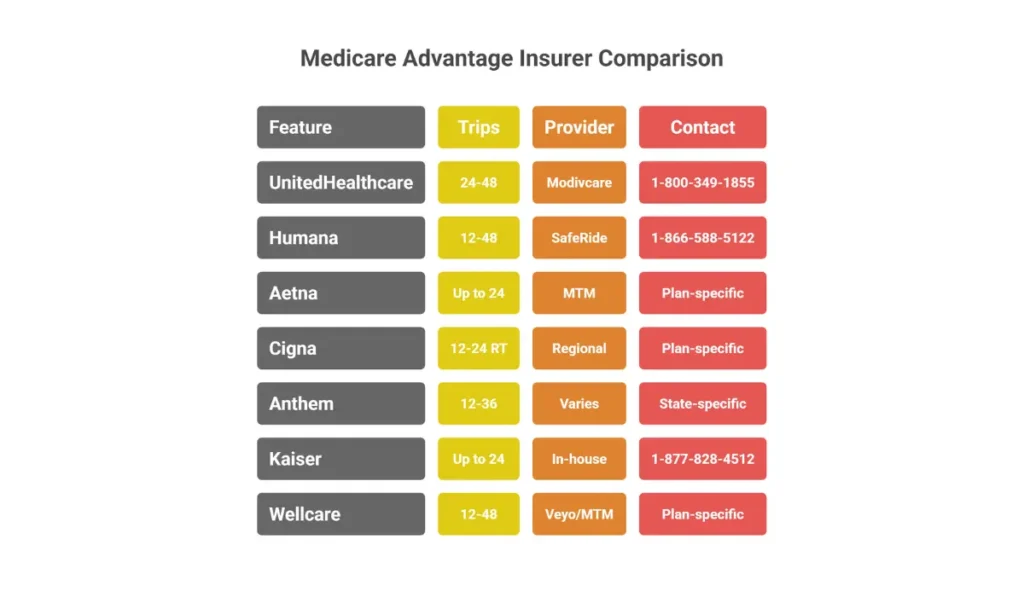
Medicare Advantage Transportation Comparison Table
| Insurance Company | Typical Annual Trip Limit | Advance Notice Required | Primary Broker | Main Scheduling Phone | Key Consideration |
|---|---|---|---|---|---|
| UnitedHealthcare | 24-48 (D-SNP higher) | 48-72 hours | Modivcare | 1-800-349-1855 | Most extensive network; county-specific rules |
| Humana | 12-48+ | 72 hours | SafeRide / Modivcare | 1-866-588-5122 | Offers mileage reimbursement |
| Aetna | Up to 24 (D-SNP unlimited) | 48-72 hours | MTM Health | Plan-specific | CVS integration; strong D-SNP |
| Cigna | 12-24 round trips | 24-48 hours | Regional | Plan-specific | Moderate limits; chronic care focus |
| Anthem BCBS | 12-36 | 48+ hours | Modivcare/MTM | State-specific | Highly fragmented by state |
| Kaiser | Up to 24 | 48+ hours | SafeRide/Modivcare | 1-877-828-4512 | Only to Kaiser facilities |
| Wellcare | 12-48 | 48-72 hours | Veyo/MTM | Plan-specific | Strong D-SNP focus |
D-SNP Transportation Benefits: Enhanced Coverage for Dual-Eligible Beneficiaries
Dual Special Needs Plans, called D-SNPs, represent the gold standard for Medicare transportation benefits. These plans serve people who qualify for both Medicare and full Medicaid benefits simultaneously, a population of approximately 12 million Americans.
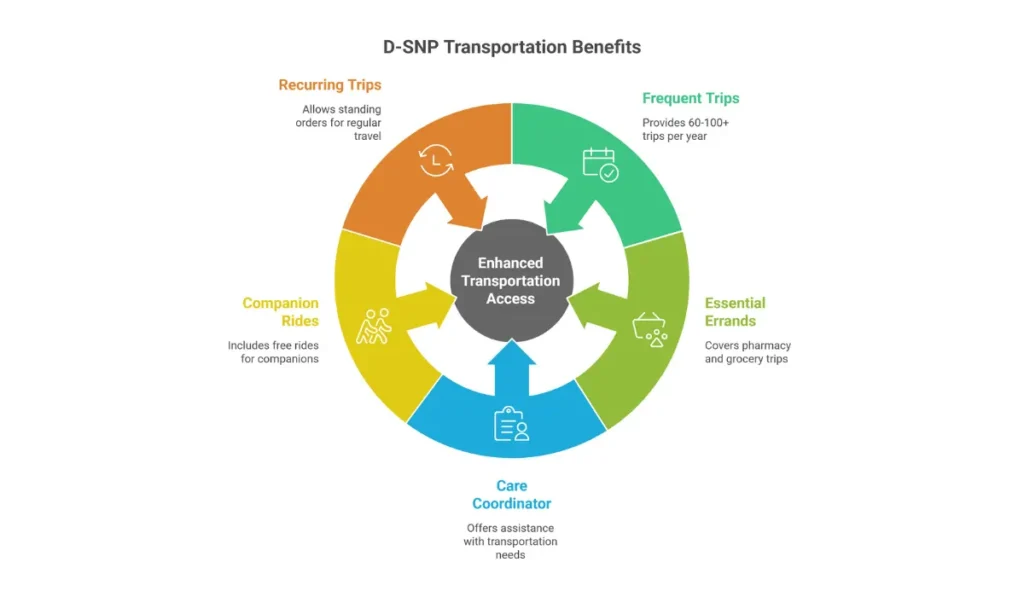
Why D-SNP Transportation Is Superior
D-SNP plans consistently offer more generous transportation benefits than standard Medicare Advantage plans. Here is why:
Higher Trip Limits: While standard plans might offer 24 trips annually, D-SNP plans frequently provide 60, 100, or even unlimited trips for medical purposes.
Broader Destination Coverage: Beyond medical appointments, many D-SNPs cover trips to pharmacies, grocery stores, food banks, senior centers, and wellness activities. This recognition that nutrition and social engagement affect health outcomes reflects the holistic approach these plans take.
Care Coordination Integration: D-SNP members typically have assigned Care Coordinators who can help set up standing orders for recurring appointments like dialysis or chemotherapy. This eliminates the need to call and schedule each trip individually.
Companion Policies: Nearly all D-SNPs allow an escort or caregiver to ride along at no additional cost.
Simplified Benefit Administration: Fully Integrated D-SNPs (FIDE-SNPs) manage both Medicare and Medicaid benefits through a single plan, eliminating confusion about which program to contact for transportation.
D-SNP Transportation by Insurer
| Insurance Company | D-SNP Transportation Highlights |
|---|---|
| UnitedHealthcare Dual Complete | 24-48+ trips; includes pharmacy; reliable Modivcare network |
| Humana Dual Eligible SNP | Up to 48 trips; mileage reimbursement; volunteer driver options |
| Aetna D-SNP/FIDE-SNP | Some plans unlimited; deep CVS/pharmacy integration |
| Wellcare D-SNP | High chronic care focus; strong in certain states |
| Anthem Dual Advantage | 60-100+ trips in some states; varies significantly by state |
How to Qualify for D-SNP Plans
To enroll in a D-SNP, you must have:
- Medicare Part A and Part B
- Full Medicaid benefits from your state (not just partial or spend-down Medicaid)
- Residence within the plan’s service area
Enrollment typically happens during the Annual Enrollment Period from October 15 through December 7, though Special Enrollment Periods exist for qualifying life events. Use the Medicare.gov Plan Finder to search D-SNPs in your ZIP code.
How NEMT Providers Bill Medicare Advantage Plans
For transportation providers, Medicare Advantage represents a growing revenue opportunity. Understanding the billing requirements and processes is essential for success in this market.
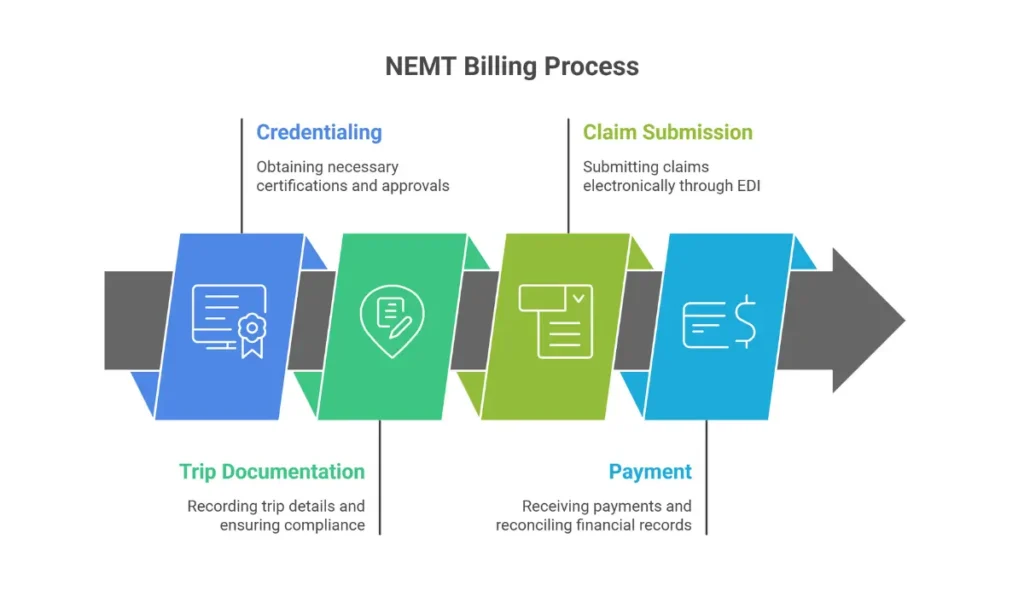
The Critical Difference: Broker-Based Payment
Unlike Medicaid NEMT where providers often bill state programs directly, Medicare Advantage NEMT operates through the broker system. You do not bill UnitedHealthcare or Humana directly. Instead, you contract with and bill through the brokers they use: Modivcare, MTM, SafeRide, or others.
This means successful MA billing requires:
- Credentialing with multiple brokers, not with insurance companies
- Learning each broker’s specific submission requirements
- Managing multiple portals and processes
- Understanding that rates are negotiated with brokers, not set by Medicare
For comprehensive information on working with transportation brokers, our NEMT broker billing guide covers the specifics of each major broker’s requirements.
Credentialing Requirements for MA NEMT Providers
Before you can accept Medicare Advantage transportation trips, you must complete credentialing with the relevant brokers. While each broker has slightly different requirements, common elements include:
Business Documentation:
- Valid business license
- EIN (Employer Identification Number)
- NPI (National Provider Identifier) with ambulette taxonomy
- W-9 form
- Signed provider agreement
Insurance Requirements:
- Commercial auto liability insurance ($1 million or higher)
- General liability insurance ($1 million per occurrence, $2 million aggregate)
- Workers compensation insurance if you have employees
Vehicle Requirements:
- Annual DOT safety inspection certificates
- ADA-compliant lift or ramp certification for wheelchair vehicles
- Valid registration for all vehicles
- Vehicle age limits (typically 7 to 10 years maximum)
- Required safety equipment including first aid kits and fire extinguishers
Driver Requirements:
- Valid driver’s license appropriate for vehicle type
- Clean motor vehicle record for the past 3 to 7 years
- National background check
- Drug and alcohol testing
- CPR and First Aid certification
- HIPAA compliance training
The credentialing process typically takes 90 to 120 days from application to approval. Apply well in advance of when you want to start accepting trips.
For step-by-step guidance on entering this market, read our guide on how to start NEMT billing.
HCPCS Codes for Medicare Advantage NEMT
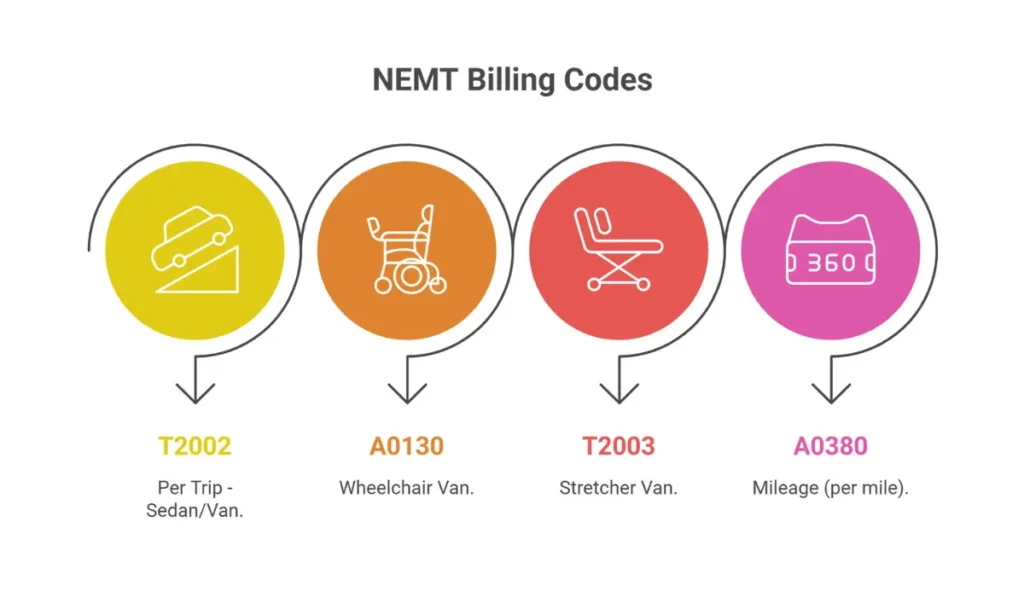
Medicare Advantage NEMT billing uses the same HCPCS codes as other payers. The most common codes include:
| HCPCS Code | Description | When to Use |
|---|---|---|
| T2002 | Non-emergency transportation, per trip | Base code for sedan or standard van trips |
| A0130 | Non-emergency wheelchair van | Alternative base code for wheelchair transport |
| T2003 | Non-emergency transportation, stretcher van | For patients requiring stretcher/gurney transport |
| A0380 | BLS mileage per mile | Added to base code to bill for distance traveled |
| S0215 | Non-emergency mileage | Alternative mileage code used by some brokers |
Modifiers indicate trip origin and destination:
- R = Residence
- P = Physician’s office
- H = Hospital
For example, a trip from home to a doctor’s office would use modifier RP. A trip from a hospital to home would use HR.
For complete coding guidance including denial prevention strategies, see our NEMT billing guide.
The MA NEMT Claims Process
- Eligibility Verification: Before dispatch, confirm the member has active transportation benefits and the trip is authorized through the broker’s system.
- Trip Documentation: Use GPS-enabled, EVV-compliant software to record:
- Exact pickup and dropoff times
- Mileage with odometer readings
- Passenger signature or electronic confirmation
- Service level provided (ambulatory, wheelchair, stretcher)
- Any incident notes
- Claim Preparation: Apply the correct HCPCS code based on service level and add mileage. Include all required modifiers. Ensure documentation supports the service billed.
- Electronic Submission: Submit claims via EDI 837P format through the broker’s designated portal within 24 to 48 hours of service for fastest processing.
- Payment and Reconciliation: Expect payment via EFT within 15 to 45 days depending on the broker. Reconcile payments against Electronic Remittance Advice (ERA 835) documents.
Managing Denials
Common denial reasons for MA NEMT claims include:
- No prior authorization: The trip was not approved in the broker’s system before service
- Member not eligible: The patient’s benefits had lapsed or the plan does not cover transportation
- Timely filing exceeded: Claim submitted after the broker’s deadline
- Documentation insufficient: Missing signatures, timestamps, or mileage records
To appeal denials:
- Identify the specific denial reason from the remittance advice
- Gather supporting documentation (GPS logs, signed trip sheets, authorization records)
- Submit appeal through the broker’s portal within the deadline (typically 30 to 60 days)
- Escalate to the broker’s formal dispute process if initial appeal is denied
For detailed denial code explanations and appeal strategies, reference our NEMT denial codes guide.
Prior Authorization Requirements
Many Medicare Advantage transportation trips require prior authorization before the ride can be completed. Understanding these requirements prevents service denials and payment issues.
When Prior Authorization Is Required:
- Stretcher transport (almost always requires physician certification)
- Trips exceeding mileage limits specified in the plan
- Non-standard destinations (if covered)
- Multiple trips scheduled in a single day
- Out-of-service-area transport
The Prior Authorization Process:
- The broker’s system checks eligibility when you schedule a ride
- Standard trips (ambulatory, wheelchair) typically auto-approve if trips remain in your annual allowance
- Stretcher and specialty services require a Physician Certification Statement (PCS)
- The PCS must document why the patient cannot sit upright and requires lying down during transport
- Authorization codes are assigned to approved trips
- Providers must include authorization numbers on claims
Missing or incorrect prior authorization is one of the most common reasons for claim denials. Our comprehensive NEMT prior authorization guide explains the documentation requirements for each major broker and how to prevent authorization-related denials.
Compliance Requirements for MA NEMT Providers
Operating in the Medicare Advantage transportation market requires strict compliance with federal and state regulations.
Federal Requirements:
- HIPAA privacy and security compliance for patient health information
- Medicare Fraud, Waste, and Abuse (FWA) training for all staff
- OIG exclusion list screening for employees and contractors
- ADA accessibility standards for vehicles and services
- DOT vehicle safety standards
State Requirements (vary by location):
- State business licensing
- Vehicle registration and inspection
- Driver licensing appropriate to vehicle class
- Workers compensation insurance
- State-specific NEMT certification (in some states)
Broker-Specific Requirements:
- EVV (Electronic Visit Verification) compliance
- GPS tracking for all trips
- Real-time communication capabilities
- Electronic signature capture
- Data reporting and submission standards
Failure to maintain compliance can result in removal from broker networks, claim clawbacks, and legal penalties. For detailed compliance information, including state-by-state requirements, see our NEMT compliance guide.
Technology Requirements for Modern NEMT Billing
Successful Medicare Advantage NEMT operations require integrated technology systems. The days of paper trip sheets and manual billing are over.
Essential Technology Components:
Dispatch and Scheduling Software: Modern NEMT software manages trip assignments, driver routing, and real-time communication with brokers. Look for platforms that integrate directly with Modivcare, MTM, and other major broker systems.
GPS and EVV Systems: Electronic Visit Verification is now standard. Your technology must capture precise pickup and dropoff times, locations, and mileage for every trip.
Billing Software: Claims management systems should scrub claims for errors, submit electronically via EDI 837P, and track payments and denials.
Driver Mobile Apps: Drivers need mobile tools to receive trip details, capture signatures, record incidents, and communicate with dispatch.
Reporting and Analytics: Data visibility helps identify denial trends, optimize operations, and prepare for broker audits.
For recommendations on platforms that meet these requirements, our guide on the best NEMT software compares leading options.
Medicare Advantage vs Medicaid NEMT Billing Comparison
| Aspect | Medicare Advantage NEMT | Medicaid NEMT |
|---|---|---|
| Payer | Private broker (Modivcare, MTM, etc.) | State Medicaid or state-contracted broker |
| Billing Portal | Broker-specific (multiple if serving multiple insurers) | Usually single state portal |
| Payment Timeline | 15-45 days typically | 45-60+ days common |
| Rate Structure | Negotiated with broker | Fixed state fee schedule |
| Rate Flexibility | Possible to negotiate better rates | No negotiation; rates are set |
| Administrative Burden | Higher (multiple broker systems) | Lower (single state system) |
For state-by-state Medicaid rate information, visit our Medicaid NEMT rates by state resource.
When to Consider Outsourcing MA Billing
Managing Medicare Advantage NEMT billing in-house becomes increasingly complex as your business grows. Signs that outsourcing may improve your operations include:
- Denial rates exceeding 10 percent
- Juggling three or more broker portals
- Missing timely filing deadlines
- Cash flow delays from slow reimbursements
- Staff spending more time on billing than transportation
- Difficulty keeping up with broker requirement changes
Professional NEMT billing services provide expertise across all major brokers, automated claim scrubbing to prevent denials, dedicated appeal management, and faster payment cycles. For transportation companies wanting to focus on operations rather than paperwork, outsourced billing often delivers better financial results than internal billing departments.
How to Find Medicare Advantage Plans with Transportation in Your Area
With transportation benefits becoming less common in 2026 (available in roughly 24 percent of individual plans, down from previous years), finding a plan that includes this benefit requires deliberate searching.
Using the Medicare Plan Finder
The official Medicare.gov Plan Finder remains the most comprehensive tool for comparing plans:
- Go to Medicare.gov/plan-compare
- Enter your ZIP code and select the 2026 coverage year
- Choose to view Medicare Advantage Plans
- Enter your current prescriptions for accurate cost estimates
- Look for the “Extra Benefits” or filter options
- Select “Transportation” to filter results
- Review the Summary of Benefits for each plan showing transportation
Important: The Plan Finder shows whether a plan offers transportation but often lacks specifics about trip limits. Always download and review the full Evidence of Coverage document before enrolling.
Questions to Ask Before Enrolling
Before committing to a Medicare Advantage plan based on its transportation benefit, get clear answers to these questions:
- How many one-way trips are included per year?
- Are trips counted as one-way or round-trip?
- What destinations are covered? Medical only or also pharmacy and other locations?
- What vehicle types are available (sedan, wheelchair, stretcher)?
- Which broker manages transportation?
- What is the scheduling phone number?
- Is there an app for booking and tracking?
- How far in advance must trips be scheduled?
- Are same-day rides available for urgent needs?
- What happens if my annual trips run out?
- Can a companion ride with me?
- Is this benefit changing for next year?
Enrollment Periods
Annual Enrollment Period (October 15 – December 7): The main window to join, switch, or drop Medicare Advantage plans. Coverage begins January 1.
Medicare Advantage Open Enrollment (January 1 – March 31): If you are already in a Medicare Advantage plan, you can switch to a different one during this window.
Special Enrollment Periods: Qualifying life events such as moving to a new area, losing employer coverage, or changes in Medicaid eligibility may allow enrollment outside the standard periods.
Getting Free Help
SHIP (State Health Insurance Assistance Program): Free, unbiased Medicare counseling available in every state. Counselors can help you compare plans and understand transportation benefits. Find your local SHIP at shiphelp.org or call 1-877-839-2675.
1-800-MEDICARE: The federal Medicare helpline (1-800-633-4227) can answer general questions and help you understand your options.
Area Agencies on Aging: Local AAAs often have Medicare counseling services and can help connect you with transportation resources regardless of insurance status.
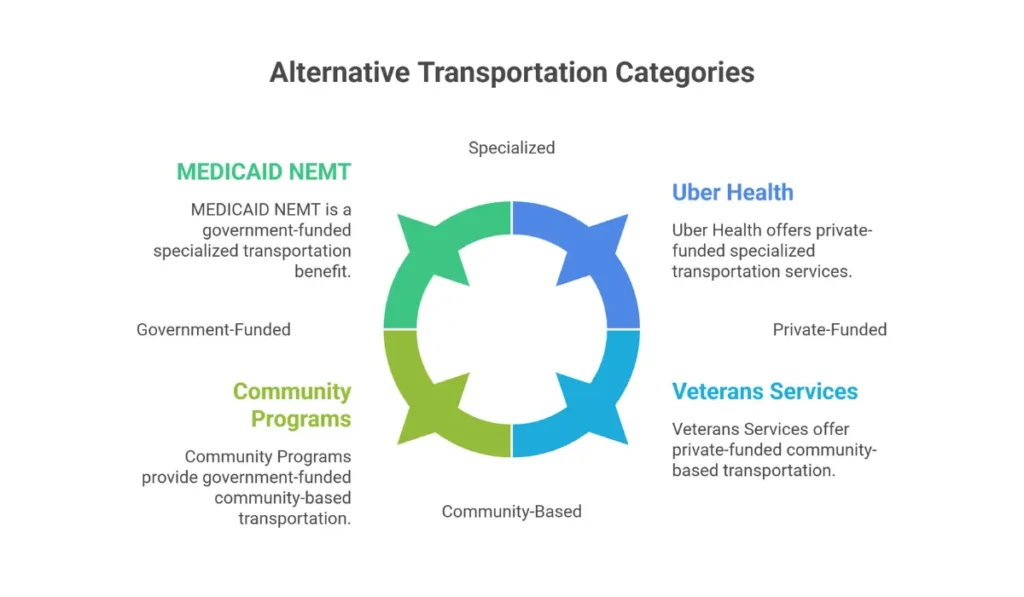
Alternative Transportation Options When Medicare Does Not Cover NEMT
If you have Original Medicare without transportation benefits, exhausted your Medicare Advantage trip limit, or need rides for destinations not covered by your plan, several alternatives exist.
Medicaid NEMT for Dual-Eligible Beneficiaries
If you qualify for both Medicare and Medicaid, your state Medicaid program likely provides NEMT as a mandatory benefit. Medicaid transportation often has no annual trip limits for medically necessary appointments.
Contact your state Medicaid office to learn about eligibility and how to schedule rides. Many states use the same brokers (Modivcare, MTM) that serve Medicare Advantage, though the processes may differ.
Community and Nonprofit Transportation Programs
Area Agencies on Aging: Contact the Eldercare Locator at 1-800-677-1116 to find your local AAA. Many offer senior transportation programs, volunteer driver services, or taxi vouchers.
American Cancer Society Road to Recovery: Cancer patients can request free rides to treatment by calling 1-800-227-2345 or visiting cancer.org.
National Kidney Foundation: Dialysis patients may find transportation assistance through NKF programs.
Faith-Based Transportation: Many churches, synagogues, and religious organizations operate volunteer driver programs for their communities.
ITNAmerica: A network of local transportation programs for seniors in participating communities.
2-1-1 Helpline: Dial 211 from any phone to connect with local community resources including transportation assistance.
Veterans Transportation Benefits
Veterans enrolled in VA healthcare may have access to:
- Veterans Transportation Service (VTS) for rides to VA facilities
- Beneficiary Travel Program for mileage reimbursement
- DAV (Disabled American Veterans) shuttle services
Contact your local VA Medical Center or call 1-877-222-8387 for information.
ADA Paratransit Services
The Americans with Disabilities Act requires public transit agencies to provide paratransit services for individuals whose disabilities prevent them from using regular fixed-route buses. Paratransit offers door-to-door or curb-to-curb service for eligible riders.
To apply for paratransit eligibility, contact your local public transit authority. The process typically involves an application and may require a functional assessment.
Private Pay Options
When other options are unavailable, private pay transportation services include:
Medical Rideshare: Uber Health and Lyft Pass for Healthcare offer scheduled, HIPAA-compliant medical rides. Costs vary by distance but typically range from $20 to $50 per ride.
Traditional NEMT Companies: Local non-emergency medical transportation providers offer sedan, wheelchair, and stretcher services. Expect to pay $30 to $100 or more per round trip depending on service level and distance.
Concierge Services: Companies like SilverRide and Envoy provide premium “door-through-door” assistance including help getting in and out of buildings. Costs range from $50 to $100 per hour.
For transportation providers looking to connect with patients needing private pay services, a professional web presence is essential. NEMT website development services can help you reach seniors and caregivers searching for reliable transportation.
Frequently Asked Questions About Medicare Transportation
Does Medicare pay for non-emergency medical transportation?
Original Medicare (Parts A and B) does not cover routine transportation to doctor appointments. Coverage is limited to medically necessary ambulance services meeting strict criteria. Medicare Advantage plans, however, may include NEMT as a supplemental benefit with specific trip limits.
How many free rides does Medicare Advantage provide?
Trip limits vary by plan and insurer. Most plans offering transportation provide between 12 and 48 one-way trips per year. Dual-Eligible Special Needs Plans (D-SNPs) often offer higher limits, sometimes 60 to 100 trips or unlimited rides for medical purposes. Check your plan’s Summary of Benefits or Evidence of Coverage for your specific allowance.
Does Medicare cover transportation to dialysis?
Original Medicare Part B covers ambulance transport to dialysis only if you meet strict medical necessity requirements (bed-confined, medically dangerous to use other transport). For routine dialysis transportation, you need a Medicare Advantage plan with a transportation benefit or Medicaid NEMT coverage. Most D-SNP plans specifically include dialysis as a covered destination with generous trip allowances.
Is wheelchair transportation covered by Medicare?
Original Medicare does not cover wheelchair van or ambulette services. Many Medicare Advantage plans do include wheelchair-accessible vehicle transportation as part of their NEMT benefit. When scheduling, you must specify that you need a wheelchair-accessible vehicle.
What is the phone number for Medicare Advantage transportation?
There is no single Medicare transportation phone number. You must contact your specific plan’s transportation broker. Common numbers include:
UnitedHealthcare (Modivcare): 1-800-349-1855
Humana (SafeRide): 1-866-588-5122
Kaiser Permanente: 1-877-828-4512
Check your member ID card for the correct number for your plan.
Can a caregiver or family member ride with me?
Most Medicare Advantage plans and Medicaid NEMT programs allow one adult companion to ride at no additional charge when you need assistance. You must mention the need for a companion when scheduling your ride. Some plans may require documentation that the companion is medically necessary.
How far in advance do I need to schedule a Medicare Advantage ride?
Most transportation brokers require 48 to 72 hours (2 to 3 business days) advance notice. Same-day rides may be available for urgent situations but are not guaranteed. Wheelchair and stretcher transport typically require more advance notice than ambulatory sedan service.
What happens if my Medicare ride does not show up?
If your driver is late or does not arrive:
1. Call the broker’s “Where’s My Ride?” line or use their tracking app
2. The broker can locate your driver or dispatch a replacement
3. If you miss your appointment, contact your doctor’s office to reschedule
4. File a complaint with the broker and your Medicare Advantage plan if service failures occur repeatedly
Can I get mileage reimbursement instead of rides?
Some Medicare Advantage plans, particularly Humana through SafeRide Health, offer mileage reimbursement programs for members who have family or friends drive them to appointments. You must log miles with odometer readings and have the trip verified by your healthcare provider. This is not a standard benefit; check your plan details.
Does Medicare cover stretcher transport?
Original Medicare Part B covers non-emergency stretcher ambulance transport only when medically necessary. Some Medicare Advantage plans include non-emergency stretcher van service, but this typically requires a Physician Certification Statement documenting that you cannot sit upright for transport and is subject to vehicle availability in your area.
What is the difference between Medicare and Medicaid transportation?
Medicaid NEMT is a mandatory benefit in all states with broad coverage and often no annual trip limits. Medicare transportation is an optional supplemental benefit available only through some Medicare Advantage plans with specific annual limits. If you qualify for both programs (dual-eligible), you may have access to both Medicaid NEMT and Medicare Advantage transportation.
How do NEMT providers bill Medicare Advantage?
NEMT providers do not bill Medicare Advantage plans directly. Instead, they contract with and submit claims to the plan’s transportation broker (Modivcare, MTM, SafeRide, Veyo, etc.). Providers must be credentialed with each broker, use correct HCPCS codes (commonly T2002, A0130, A0380), and submit electronic claims through broker-specific portals. For detailed billing guidance, see our complete NEMT billing guide.
Do all Medicare Advantage plans include transportation?
No. In 2026, only approximately 24 to 30 percent of individual Medicare Advantage plans offer transportation benefits. The benefit is more common in Special Needs Plans (SNPs), where 67 to 85 percent include transportation. Transportation is a supplemental benefit that plans may offer but are not required to provide.
What if I run out of Medicare transportation trips?
If you exhaust your annual trip allowance, options include:
-Using Medicaid NEMT if you are dual-eligible
-Contacting Area Agencies on Aging for local senior transportation programs
-Exploring nonprofit programs like American Cancer Society Road to Recovery
-Using private pay services like Uber Health or local NEMT companies
-Asking your Medicare Advantage plan about exceptions for medical necessity
Are Medicare transportation benefits changing in 2026?
Yes. The percentage of Medicare Advantage plans offering transportation has decreased compared to previous years. In 2026, approximately 24 percent of individual plans include the benefit compared to around 30 percent in 2025. However, Special Needs Plans (particularly D-SNPs) continue to maintain strong transportation offerings. Plans may also change trip limits, covered destinations, and booking requirements from year to year. Always review your plan’s Annual Notice of Change (ANOC) sent each fall.
Does Medicare cover transportation for mental health appointments?
Original Medicare does not cover routine transportation for any appointments, including mental health visits. Medicare Advantage plans that include transportation typically cover trips to any in-network healthcare provider, which includes mental health professionals. Some plans explicitly list behavioral health as a covered destination category.
Can I use Medicare Advantage transportation for dental or vision appointments?
If your Medicare Advantage plan covers dental and vision services AND includes transportation benefits, you can typically use transportation for those appointments. However, some plans limit transportation only to “medical” appointments. Check your Evidence of Coverage for the specific list of eligible destinations.
What happens if my appointment runs late and I miss my scheduled return ride?
If you selected a scheduled return time but your appointment runs long:
-Call the transportation broker as soon as you realize you will be late
-They may be able to adjust your pickup time
-If the vehicle already arrived and left, you will need to reschedule
-Consider scheduling will-call returns for appointments with unpredictable durations
For ongoing treatments with variable appointment lengths, will-call returns (where you call when ready) provide more flexibility than fixed pickup times.
Does Medicare cover long-distance medical transportation?
Medicare Advantage transportation benefits typically have mileage or geographic limits. Common restrictions include:
-Service area limited to plan’s geographic coverage (usually one or several counties)
-Maximum mileage per trip (such as 50 or 60 miles from home)
-Only to in-network providers for HMO plans
For out-of-area specialty care, you may need to explore private pay options or charitable medical transportation programs. Some plans offer exceptions for certain specialist visits if in-network alternatives do not exist locally.
How do I file a complaint about Medicare transportation service?
If you experience poor service such as chronically late drivers, unsafe vehicles, or missed pickups:
1. Document the incident: Record dates, times, driver information, and what happened
2. Report to the broker: Call the transportation broker’s customer service line
3. File a grievance with your plan: Contact your Medicare Advantage plan’s member services
4. Contact CMS: For unresolved issues, file a complaint with Medicare at 1-800-MEDICARE
5. Use 1-800-MEDICARE: They can help navigate the complaint process
Repeated service failures should be formally documented. Patterns of problems may indicate the need to switch plans during open enrollment.
Is NEMT a good business opportunity for transportation providers?
The Medicare Advantage transportation market is growing as more seniors enroll in MA plans. For existing transportation companies or entrepreneurs considering NEMT, key factors include:
-Growing demand from aging population
-Multiple revenue streams (MA, Medicaid, private pay)
-Recurring trip volume from chronic care patients
-Technology and compliance requirements
-Broker credentialing timelines
For detailed business analysis including startup costs, profitability factors, and market trends, read our comprehensive guide on whether NEMT is a profitable business.
Does Medicare pay for rides to the doctor?
Original Medicare does not pay for routine rides to the doctor. If you have a Medicare Advantage plan, it might include free transportation as an extra benefit. Check your specific plan to see if rides are covered.
What is the phone number for Humana Medicare transportation?
For Humana Medicare transportation, call 1-866-588-5122. Have your Humana member ID number ready when you call to schedule a ride.
How do I get a free ride to my dialysis appointment?
Check if your Medicare Advantage or Medicaid plan includes transportation benefits. If it does, call the transportation number on your insurance card at least 2 to 3 days before your appointment to schedule a ride.
Can Medicare pay for Uber to my appointment?
Some Medicare Advantage plans now partner with Uber Health or Lyft to provide rides. Original Medicare does not cover Uber. Check with your plan’s customer service to see if rideshare is an option for your transportation benefit.
Alexa, does UnitedHealthcare cover rides to the doctor?
Many UnitedHealthcare Medicare Advantage plans include transportation. Call Modivcare at 1-800-349-1855 to schedule rides. Check your specific UHC plan documents for your annual trip limit.
Hey Siri, my Medicare ride is late. What should I do?
Call the Where’s My Ride line on your confirmation or call the transportation broker directly. They can track your driver and send a replacement if needed. Keep the phone number saved in your contacts for situations like this.
How many rides do I get with Medicare Advantage?
Most Medicare Advantage plans with transportation offer between 12 and 48 one-way trips per year. A round trip to the doctor and back home counts as 2 trips. Check your plan’s benefits summary for your exact number.
Can my daughter ride with me in the Medicare van?
Yes, most Medicare plans allow one family member or caregiver to ride with you at no extra charge. Tell the scheduler you need a companion when you book the ride so they have enough space in the vehicle.
How far in advance do I book a Medicare ride?
You should schedule Medicare transportation at least 48 to 72 hours before your appointment. That means calling 2 to 3 business days ahead. Same-day rides are usually not available.
What is D-SNP transportation?
D-SNP stands for Dual Special Needs Plan. It is for people who have both Medicare and Medicaid. D-SNP plans often include more transportation trips than regular Medicare Advantage, sometimes 60 to 100 rides per year or even unlimited.
Does Medicare cover wheelchair vans?
Original Medicare does not cover wheelchair vans. Many Medicare Advantage plans do include wheelchair-accessible transportation. When you call to schedule, tell them you need a wheelchair van and they will send the right vehicle.
Can I schedule a Medicare ride for my mom?
Yes, you can schedule rides for a family member. Call the transportation number on their Medicare card. Have their member ID, appointment details, and pickup address ready when you call.
What do I do if my Medicare rides run out?
If you use all your Medicare Advantage transportation trips, try calling your local Area Agency on Aging for senior ride programs, check if you qualify for Medicaid transportation, or ask about nonprofit programs like American Cancer Society rides. You can also use Uber Health or local medical transportation for private pay.
Does Medicare cover pharmacy trips?
Original Medicare does not. Some Medicare Advantage plans, especially D-SNP plans, cover trips to the pharmacy as part of their transportation benefit. Check your plan documents or call member services to confirm.
How do I find Medicare plans with transportation near me?
Go to Medicare.gov and use the Plan Finder tool. Enter your ZIP code, select Medicare Advantage plans, and look for transportation in the extra benefits filter. You can also call 1-800-MEDICARE or your local SHIP office for free help comparing plans.
What is the number for UnitedHealthcare Medicare rides?
For UnitedHealthcare Medicare Advantage transportation, call Modivcare at 1-800-349-1855 for reservations. For will-call return rides, you can call 1-833-587-3901.
Does Aetna Medicare have transportation?
Some Aetna Medicare Advantage plans include transportation benefits managed by MTM. Check your Aetna plan documents or call member services to see if your specific plan covers rides to medical appointments.
What happens if I miss my Medicare ride?
If you are not ready when your driver arrives, they will only wait about 5 minutes before marking it as a no-show. This may count against your annual trip allowance. Always be ready 15 minutes before your scheduled pickup time.
Can veterans get free medical rides?
Yes. Veterans enrolled in VA healthcare may qualify for the Veterans Transportation Service or DAV shuttle services to VA facilities. Call your local VA Medical Center or 1-877-222-8387 to learn about transportation options.
What does NEMT stand for?
NEMT stands for Non-Emergency Medical Transportation. It means scheduled rides to doctor appointments, dialysis, therapy, and other healthcare visits for people who do not need an ambulance.
Is Medicare transportation available on weekends?
Weekend availability depends on your plan and transportation broker. Many services have limited hours on Saturdays and may not operate on Sundays or holidays. Ask about weekend availability when you schedule your ride.
How do I complain about my Medicare ride service?
Call the transportation broker’s customer service line first. If that does not resolve the issue, contact your Medicare Advantage plan’s member services to file a grievance. You can also call 1-800-MEDICARE for help with complaints.
Can I get a stretcher van with Medicare?
Some Medicare Advantage plans cover stretcher van transport for patients who cannot sit upright. You will need a doctor’s statement saying stretcher transport is medically necessary. Not all areas have stretcher vans available.
Conclusion: Taking Control of Your Healthcare Transportation
Transportation should never be the reason you miss a doctor’s appointment, skip a dialysis treatment, or delay cancer care. While Original Medicare’s coverage gap leaves millions without transportation assistance, Medicare Advantage plans provide a vital alternative for those willing to do the research.
The key takeaways from this guide:
Original Medicare does not cover routine NEMT. This will not change in 2026. If you have traditional Medicare and need rides to medical appointments, you must look elsewhere for help.
Medicare Advantage transportation varies dramatically. Plans differ in trip limits (12 to unlimited), covered destinations, booking requirements, and broker partnerships. Never assume your plan covers transportation—verify the specific details before you need a ride.
D-SNP plans offer the best transportation benefits. If you qualify for both Medicare and Medicaid, enrolling in a Dual Special Needs Plan typically provides more generous transportation than standard Medicare Advantage.
Booking requires advance planning. Most brokers need 48 to 72 hours notice. Build ride scheduling into your appointment planning routine.
Alternative resources exist. If Medicare options do not meet your needs, community programs, Medicaid, Veterans services, and private pay options provide additional paths to healthcare access.
For NEMT providers, the Medicare Advantage market represents significant growth opportunity. Understanding the broker-based billing system, maintaining proper credentialing, and investing in compliant technology are essential for success. Whether you manage billing internally or partner with professional medical billing services, staying current with broker requirements determines your revenue performance.
If you are exploring whether to enter or expand in this market, our resource on whether non-emergency medical transportation is a good business provides the financial and operational analysis you need.
Transportation barriers to healthcare are solvable. With the right plan, the right information, and the right support, you can ensure that getting to your next appointment is one less thing to worry about.
This guide was last updated for the 2026 Medicare plan year. Medicare benefits change annually. Always verify current coverage details with your specific plan’s Evidence of Coverage or by contacting your insurer directly.
For NEMT providers seeking to optimize operations, EliteMed Financials offers specialized billing services, compliance consulting, and technology solutions designed specifically for the medical transportation industry.